Research Notes
3 min read
Why Aulab Still Matters to Bari's Startup Pipeline
Bari's startup story is not only about companies that raise money. It is also about local operators who keep turning career changers into technical talent, and Aulab remains one of the clearest examples.
Startup ecosystems are not built only by founders who raise capital. They are also built by local institutions that keep producing technical talent people can actually hire.
When people talk about startup ecosystems, they usually look for rounds, accelerators, and product launches. That misses a simpler question: who is actually helping a city produce new technical workers and career-switchers that local companies can hire?
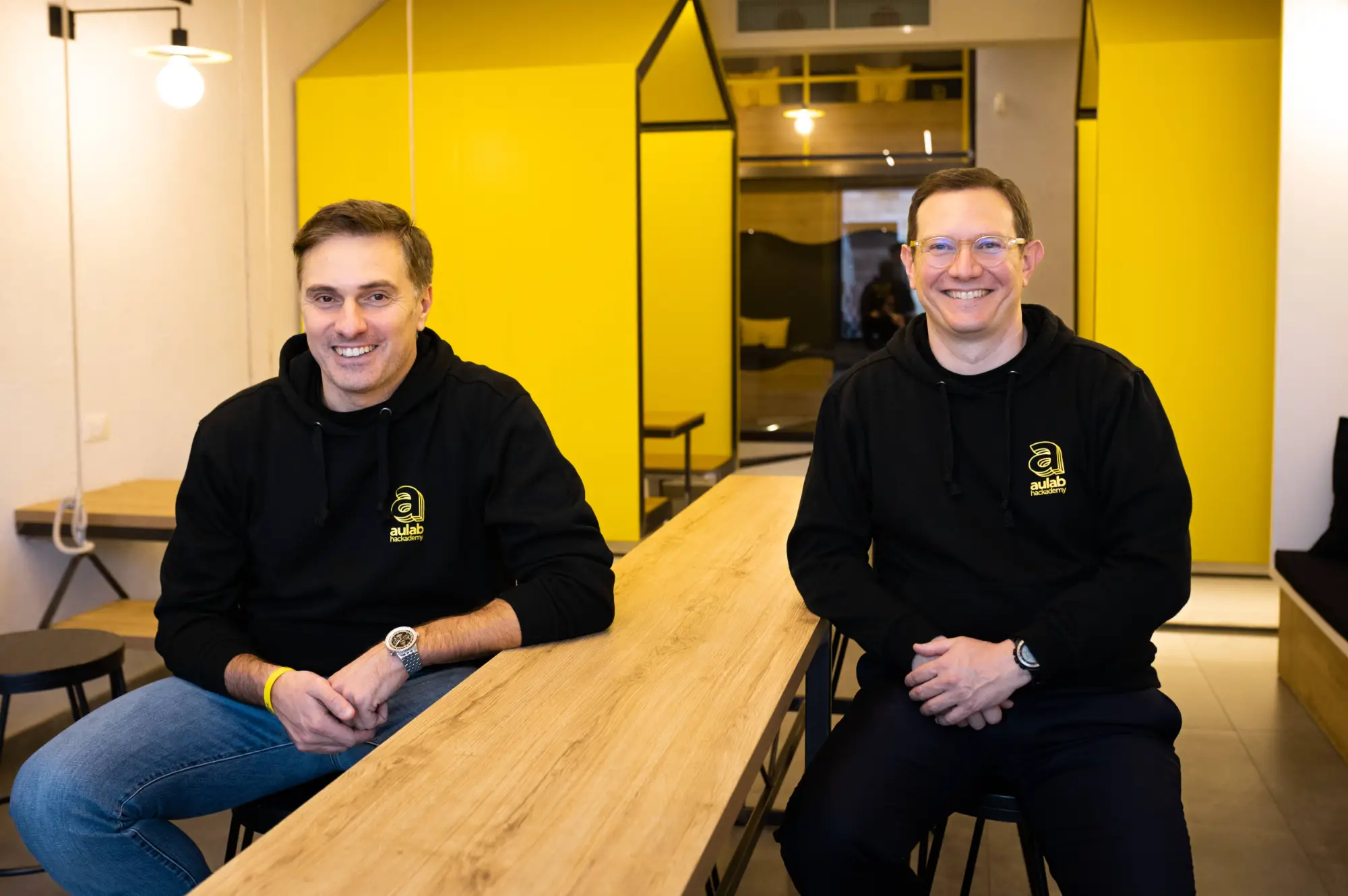
Davide Neve and Giancarlo Valente, identified as Aulab's co-founders on the official company page.
In Bari, Aulab still deserves attention on that front. The company's own about page identifies founders Davide Neve and Giancarlo Valente, and places the organization at Strada S. Giorgio Martire, 2D, 70124 Bari. The same page describes a mission centered on helping people build careers in digital and tech through structured courses, a certified method, and instructors aligned with market demand.
That would already make Aulab relevant. But the current signal is more concrete than a mission statement.
The April 2026 hiring signal
On its Digital Career Day page, Aulab says the next edition will run on 28 April 2026, from 09:30 to 17:00, on Zoom. The company describes the event as a free way for employers to meet Digital and Tech profiles who have completed Aulab programs and to collect CVs for talent acquisition.
That is not startup theater. It is infrastructure.
If you care about Bari's entrepreneurship pipeline, you should care about institutions that repeatedly create touchpoints between trained talent and actual hiring demand. Without that layer, the ecosystem keeps recycling the same founders, the same agencies, and the same talent shortages.
Why the founders matter
The founders matter here not because Aulab is the loudest local brand, but because they appear to have stayed close to a practical constraint: digital economies need conversion paths, not just inspiration. Career change only matters if it can be translated into employability.
The Aulab page also makes another point clear. The company does not position itself as a generic online course portal. It is explicitly tied to Bari, visibly physical, and connected to a local venue as well as an event layer. That combination is important for a city trying to keep more technical opportunity circulating locally.
The Bari lesson
Bari's startup future will not be built only by the next venture-backed company. It will also be built by the operators who keep widening the base: people who create new developers, analysts, marketers, and technical generalists that the rest of the market can absorb.
Aulab matters because it sits in that layer. And right now, that layer may be one of the most useful things the city has.